

The Complete Guide to Cooking Measurements
Why grams and cups don't convert equally for every ingredient—and how to measure accurately
1. Why Cups ≠ Grams
A cup is a unit of volume (how much space something takes up), while grams measure weight (how heavy something is). This fundamental difference explains why you can't use a single conversion factor for all ingredients.
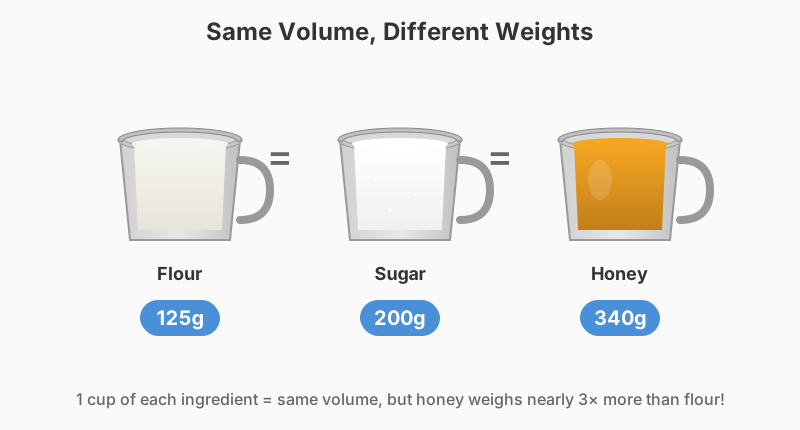
Think of it this way: fill three identical cups with flour, sugar, and honey. They all look the same volume, but put them on a scale and you'll see dramatically different weights—125g, 200g, and 340g respectively.
2. Understanding Ingredient Density
Density is the key to understanding cooking conversions. It tells us how much mass is packed into a given volume. Light, airy ingredients have low density; thick, heavy ingredients have high density.
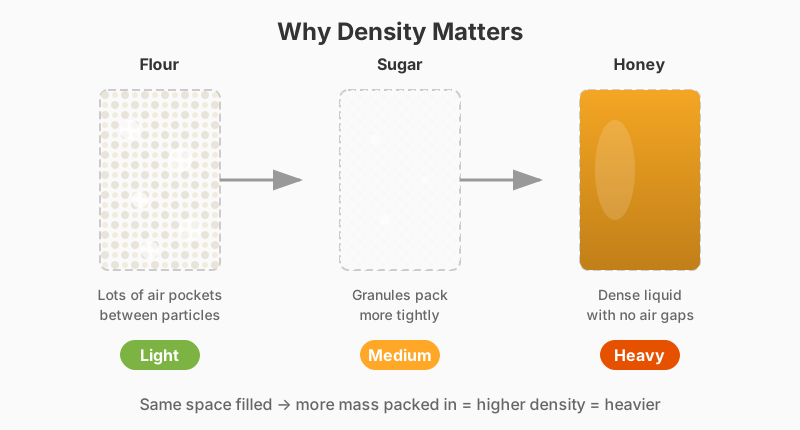
Light ingredients (low density)
Flour, oats, powdered sugar, shredded coconut—these have air pockets between particles
Dense ingredients (high density)
Honey, maple syrup, butter, peanut butter—these pack tightly with minimal air
3. The Science of Measuring
How you measure dramatically affects the weight you end up with. This is especially true for flour, where the difference between scooping and spooning can be 20-30%.
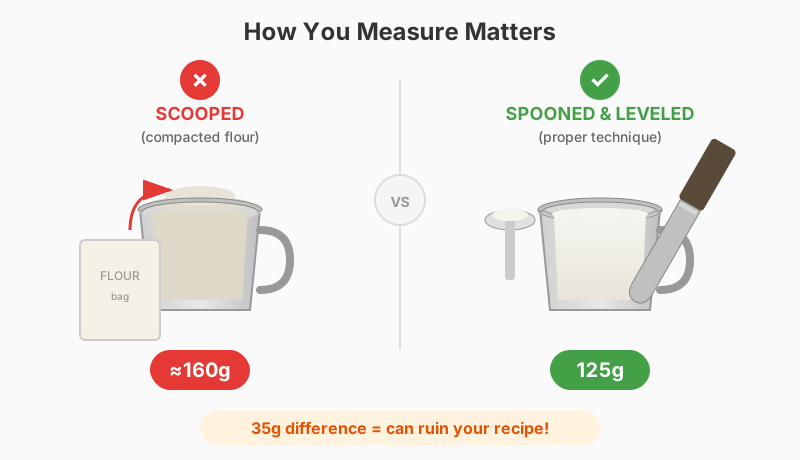
Scooped flour (compacted)
Dipping the cup directly into the flour bag compacts it, giving you up to 160g per cup instead of 125g. This extra 35g can ruin your recipe!
Spooned & leveled flour (proper method)
Fluff the flour with a fork, spoon it gently into the measuring cup without packing, then level with a straight edge. This gives you the standard 125g per cup.
4. Common Ingredient Reference
Here are the most commonly used baking ingredients and their grams per cup. Bookmark this as your quick reference!
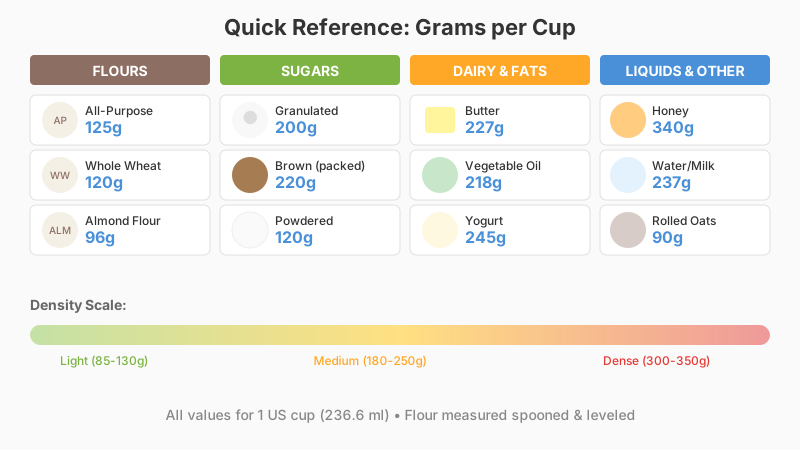
| Ingredient | Grams per Cup | Notes |
|---|---|---|
| All-Purpose Flour | 125g | Spooned & leveled |
| Granulated Sugar | 200g | Standard granulated |
| Brown Sugar (packed) | 220g | Firmly packed |
| Powdered Sugar | 120g | Spooned & leveled |
| Butter | 227g | 2 US sticks |
| Honey | 340g | — |
| Rolled Oats | 90g | — |
| Cocoa Powder | 85g | Spooned & leveled |
5. Measurement Systems Around the World
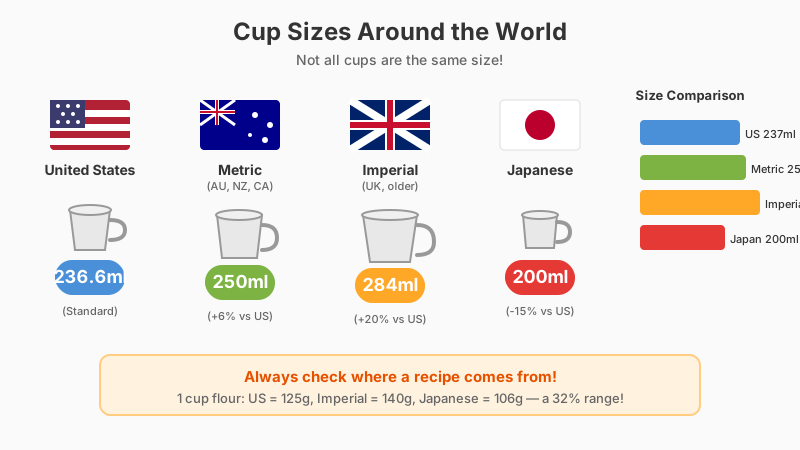
Not all cups are created equal! Different countries use different cup sizes, which can cause confusion when following international recipes.
| Ingredient | ml |
|---|---|
| US Cup | 236.6 ml |
| Metric Cup (Australia, NZ, Canada) | 250 ml |
| Imperial Cup (UK, older recipes) | 284 ml |
| Japanese Cup | 200 ml |
6. Tips for Accurate Baking
Follow these pro tips to ensure your baking turns out perfectly every time.
Invest in a kitchen scale
Professional bakers always weigh ingredients. A digital scale (accurate to 1g) costs less than a failed batch of cookies and lasts for years.
Use the spoon-and-level method for flour
Never scoop directly from the bag. The 35g difference per cup adds up quickly in recipes calling for multiple cups.
Check your recipe's origin
American, British, and Australian cups are all different sizes. When in doubt, look for recipes that list weights.
Store ingredients properly
Humidity affects ingredient density. Flour absorbs moisture from the air, which can change how much fits in a cup. Store in airtight containers.
7. Sources & References
The conversion data used in this tool comes from these authoritative sources:
Ready to Convert?
Use our converter to get accurate gram-to-cup conversions for 50+ ingredients, all based on real density data.
Open Converter