

Flex Duct Sizing Guide
Special considerations for flexible duct applications
Flexible duct is popular for residential installations due to easy installation around obstacles. However, it has significantly higher friction than rigid duct, requiring careful sizing to maintain adequate airflow.
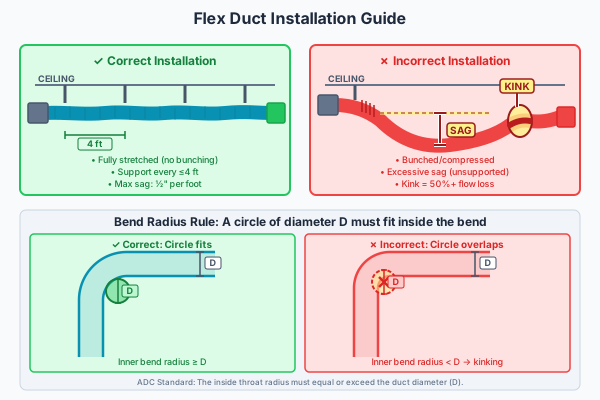
Understanding Flex Duct Friction
The corrugated inner surface of flex duct creates 2-3 times more friction than smooth galvanized steel. This means you need to either upsize the duct or accept higher pressure drops.
Flex Duct Best Practices
- Keep runs as short and straight as possible (under 25 feet)
- Fully extend flex duct - never leave it compressed
- Avoid tight bends (minimum bend radius = 1 duct diameter)
- Support flex duct to prevent sagging (support every 4-5 feet)
When to Avoid Flex Duct
Warning:
- Main trunk lines (use rigid duct for main runs)
- Runs longer than 25 feet
- Commercial applications (too much friction)
- Return air plenums (code often prohibits)
Tip:
When using this calculator for flex duct, select "Flex Duct" as the material. The calculator automatically applies the higher friction factor to give you properly sized ducts.
Sources
Try the Calculator
Use our duct calculator with the Flex Duct material setting to get properly sized flex duct recommendations.
Open Calculator
Advertisement