

Weighted Average Guide for Students
Learn how weighted averages work, calculate your university GPA with credits, and plan your target grade
How Weighted Averages Work
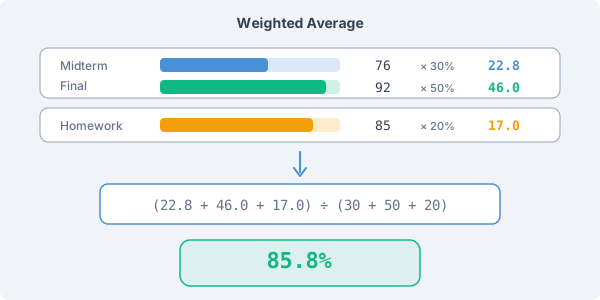
A weighted average gives more importance to some grades than others. Instead of treating every assignment equally, each grade is multiplied by its weight before averaging.
The formula is: Weighted Average = (grade₁ × weight₁ + grade₂ × weight₂ + ...) ÷ (weight₁ + weight₂ + ...)
For example, if a midterm worth 30% scores 76 and a final worth 50% scores 92, the final contributes more to your overall grade because it carries more weight.
University Weighted Average with Credits
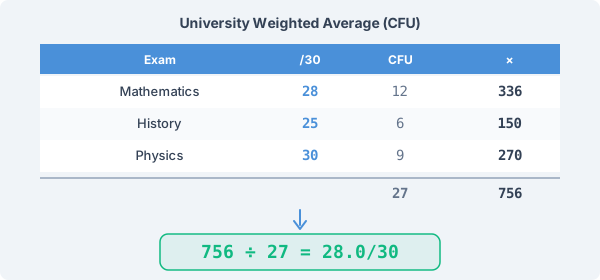
At Italian universities, each exam has a credit value (CFU — Crediti Formativi Universitari). These credits serve as the weights for calculating your overall average. Exams with more credits count more toward your final grade.
Example with three exams: • Mathematics: 28/30, 12 CFU → 28 × 12 = 336 • History: 25/30, 6 CFU → 25 × 6 = 150 • Physics: 30/30, 9 CFU → 30 × 9 = 270
Weighted average = (336 + 150 + 270) ÷ (12 + 6 + 9) = 756 ÷ 27 = 28.0/30
This is higher than the simple average (27.67) because the highest grade (Physics, 30) and the most-weighted exam (Mathematics, 28) pull the average up.
Planning Your Target Average
Use the Final Grade Calculator mode to find out what score you need on an upcoming exam to reach your target average. Enter your current weighted average, the weight of the next exam (its CFU credits as a percentage of your total), and the average you want to achieve.
The calculator tells you the minimum grade you need. If the required grade exceeds the maximum (30/30), you know you need to improve on multiple exams instead of relying on a single one.
Ready to Calculate?
Try the grade calculator now — enter your scores and see your grades instantly.
Open Grade Calculator