

How the Flow Game Works
An endless run that adapts to keep you near 85% success — and every symbol on the lane explained.
When do I tap?
Targets stream toward the hit line; tap as each one crosses it. Their colour only ever shows the judgement — Perfect, Good, or Miss. Their shape tells you what kind of hit is coming.
Tap once for every shape that crosses the hit line — no exceptions. The big circle is a beat and sounds a click. The small circle is an offbeat or an eighth — yes, you tap these too; they carry their own softer click. The hollow circle is a dropped or silent click: the sound is missing on purpose, the shape still gets its tap. The diamond is a syncopated hit that arrives a sixteenth early, just before the beat you expect.
No shape crossing the line means no tap. One shape, one tap.
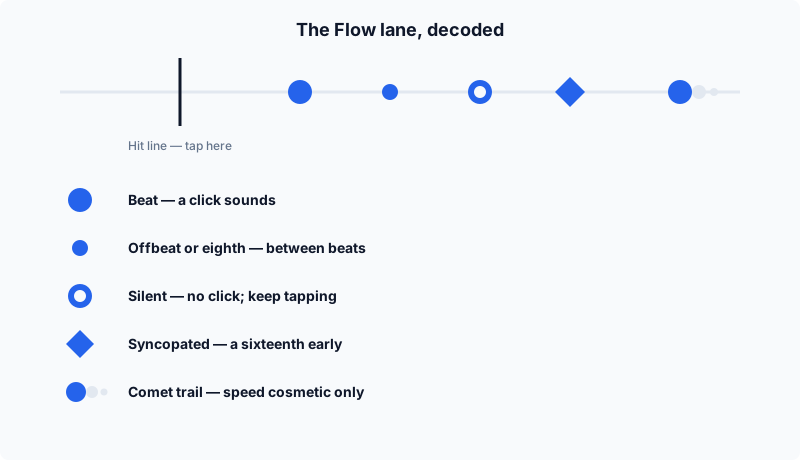
A large filled circle is a beat — a click sounds with it. A smaller circle is an offbeat or an eighth, landing between beats. A hollow circle is a silent target: no click will sound there — keep tapping right through it. A diamond is a syncopated hit that arrives a sixteenth early, just before the beat you expect.
Comet trails behind the targets appear at higher intensity — pure speed cosmetics; they change nothing about the timing.
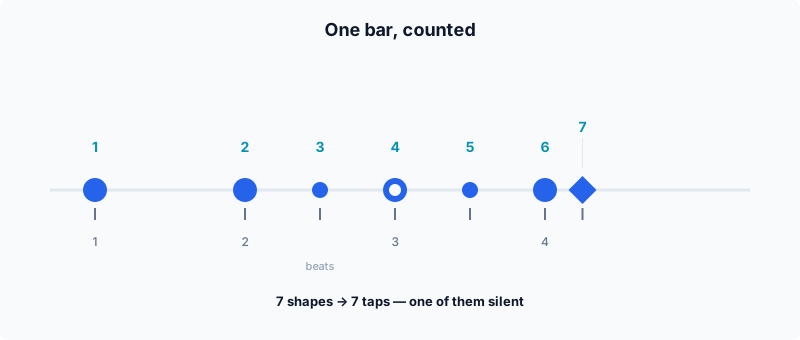
Read the bar in the picture from left to right. Beat 1: tap. Beat 2: tap. The small circle just after it is an offbeat with its softer click: tap. Beat 3 arrives hollow — the click is muted, the tap still happens. The next small circle is an eighth: tap. Beat 4: tap. And just before the offbeat you expect, the diamond lands a sixteenth early: tap it where it crosses the line.
Seven shapes, seven taps — exactly one of them silent.
If nothing is crossing the line, keep still — a tap with no target counts against you. The one-bar count-in at the start plays clicks without shapes, so you listen and wait.
Listening without tapping exists in exactly one place in this trainer: the listen bar of the Call & Response drill. Flow never asks for it — every shape on the lane wants exactly one tap.
A game that adapts to you
Flow has no settings to choose. Tap the targets as they cross the line; the game watches your recent success rate and quietly steers the challenge so you stay near 85% — hard enough to pull you forward, easy enough to keep you in the zone. Training research finds success around that level optimal for learning.
Every change lands on a bar line and is announced one bar ahead — the ♪ telegraph tells you what arrives next. Levelling up brings a toast and a two-note chime; easing off is silent. A near-perfect phrase — 98% hits or better — earns a soft tick.
Behind the lane sits a single difficulty dial. Every four-bar phrase, the game measures how many targets you hit and nudges the dial toward the point where you succeed about 85% of the time. When you struggle, it eases off roughly twice as fast as it climbs, and it never jumps more than a small step per phrase.
The Level number, 1 to 30, simply shows where that dial sits. The tempo starts near a comfortable 92 BPM and rises toward 200 BPM as you climb. At the very top comes the endurance stretch: the click slows back down, all the way toward 40 BPM — keeping a slow beat steady is a challenge of its own.
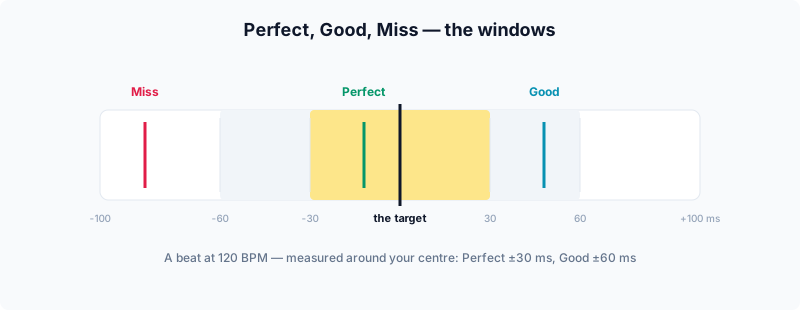
Perfect and Good have precise meanings. Perfect is landing within about 20 milliseconds of your own timing centre — or within 6% of the gap between notes, whichever is wider. Good reaches to about 45 milliseconds, or 12% of that gap. Anything beyond is a miss, and a tap with no shape nearby counts as a stray. While the difficulty dial is still low there is one more, softer credit: a tap whose spacing matches the beat earns “In rhythm” even before its placement locks in. It fades out as the dial climbs and is capped, so it can never carry a run on its own.
Your first five minutes: with no history, the run opens at level 1 and a comfortable 92 BPM — pure pulse, big circles only. Hold it steady and the dial climbs a little after every four-bar phrase. Around level 5 the ♪ telegraph announces the first offbeats, with the tempo near 110 BPM. Come back another day and you restart below where you left off, not at the bottom.
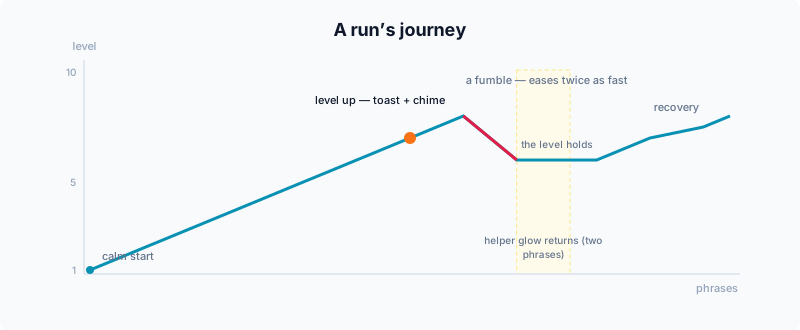
Say a phrase falls apart — three targets caught out of ten. The dial drops for the next phrase, and it drops roughly twice as fast as it ever climbs, so relief arrives quickly. The helper glow around the hit line returns for the next two phrases, and the coach line says it plainly: easing off so you can settle.
Easing only happens while you are genuinely below the 85% target. The moment a phrase lands back at or above it, the level never falls further — it holds, usually for two or three phrases while your average rebuilds, and then the climb resumes.
At the lower levels the game keeps training wheels on: a soft glow marks the hit line, each verdict is written out, and every target carries its count — beats as 1 to 4, offbeats and eighths as the word “and”. All of it fades as you climb and is gone around level 13; after a slip, it returns for two phrases while you steady.
Seven skills, trained where it helps
Behind the lane, the game tracks seven skill families: pulse, offbeats, eighths, dropped clicks, silent bars, syncopation, and swing. New families fade in as you climb, and the small pips under the lane show your rating in each — the one being practised pulses gently.
The game directs practice where your data says it helps most: the skill you find hardest appears more often at a gentler dose until it catches up, while your strengths carry the challenge.
Pulse is the foundation: the steady beats themselves. Offbeats add taps between the beats. Eighths add short runs that split the beat in two. Dropped clicks mute a single beat — the hollow circle. Silent bars mute a whole bar. Syncopation places hits a sixteenth early — the diamonds. Swing stretches pairs of eighths into a long-short feel.
The families unlock in that order, each building on the one before it, and a new family only joins once the previous one is stable.
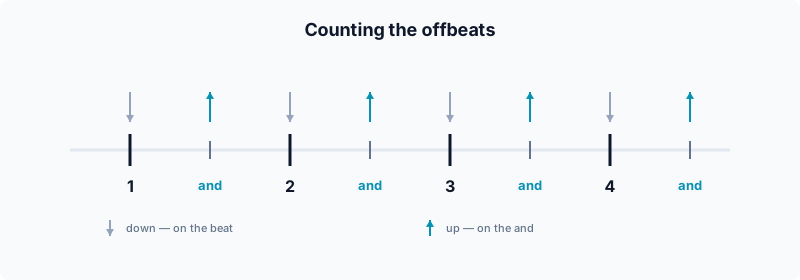
How to play the offbeats: count the eighths without stopping — “1-and-2-and-3-and-4-and” — and tap the small circles on the “and”. Think of the hand falling on the beat and lifting on the “and”: the tap rides the upstroke. Keep the main beats as your anchors and let the midpoint place itself — waiting to react to the soft click lands you consistently late. Under swing, the “and” arrives deliberately later; let the count stretch with it.
The strip below shows the count across one bar. At the lower levels the game writes this very count beneath the targets — beats as 1 to 4, offbeats and eighths as the word “and” — and the labels fade out with the other assists as you climb.
Spoken counting is for installing the subdivision at practice tempos. As the tempo rises, let it shrink: whisper the count, then count silently, then keep only the beats — or just the downbeat — while every “and” becomes a felt rebound rather than a word. At speed there are no words left, only the internal grid — exactly the progression the fading count labels follow, by design.
The live readouts
Above the lane runs a small readout row. Level shows the dial position from 1 to 30. The percentage is your hit rate over the most recent targets. Streak counts your current run of hits and appears from 3 onward; Best keeps the longest streak of this run. The centre chip appears only when your timing centre sits 25 milliseconds or more from the click.
Under those, the recipe line lists what the game is serving right now: the tempo in BPM plus tags such as offbeats, eighths, dropped clicks, silent bars, syncopation, or swing. Every 25 hits in a row, a ripple and a soft tick mark the milestone.
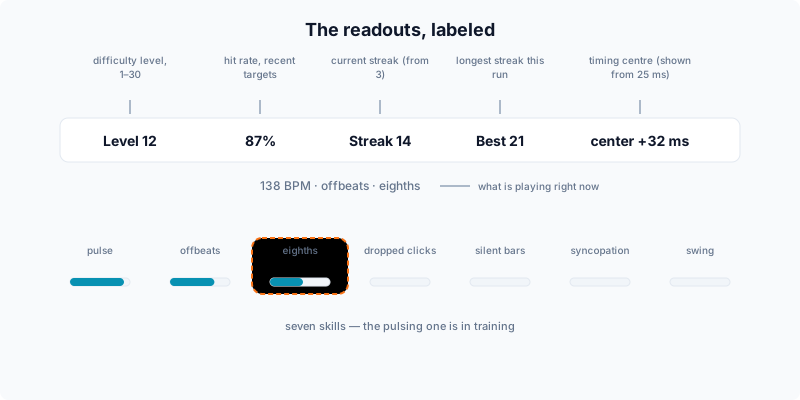
The line beneath the skill pips is the live coach. It speaks in plain words: finding your level while the game ranks you, right in the zone when the dial holds, locked in when you are about to step up, easing off when the game gives you room, and gently practicing a family when one skill is being trained.
If your taps land consistently off the click, the same line tells you how far — and reminds you that you are scored fairly around your own centre.
Suppose the centre chip reads +180 ms. That is not you playing late — it is almost always the audio chain: wireless headphones alone can add that much delay. Scoring already compensates, because every judgement is measured around that centre, so an honest run still earns its Perfects.
Still, run the 10-second setup when convenient: with the offset stored at the source, the chip simply goes away.
After the run
The summary shows your level over the run — the climb is the trophy — along with minutes played, phrases, best streak, and the Perfect/Good/Miss breakdown. A coach line points at the one place your run gave way, such as the silent bars or the syncopated notes.
The headline level is the peak you reached, not where you ended — beating your record earns a new-best banner. The coach sentence under it tells you how many phrases you held and, only when a family sits under about 90%, names your weakest skill. If your timing centre sat 60 ms or more off the click, a note mentions it — informational, never a penalty.
The session line reads duration, phrases and best streak: phrases are the four-bar blocks the game grades — roughly ten seconds each at everyday tempos — and the best streak is your longest unbroken run of hits.
Accuracy counts your hits — Perfect or Good — out of every judged target. Do not chase 100%: the game steers this toward roughly 85%, so sitting well above it means a push is coming, not that you are done.
Judgements shows the Perfect, Good and Miss counts side by side. Many Goods but few Perfects reads as reliable but not centred — precision is your next gain.
Timing is your average distance from your own centre; Consistency is the spread of your taps with tempo drift removed. Both are graded against the beat length at the tempo the run actually reached.
The level sparkline tells the story at a glance: a steady staircase means the game matched you well, a sawtooth means you played right at your edge. The radar rates every family from 0 to 100 over your previous run’s dashed ghost, and Recent sessions keeps the trend across your last runs.
How a run ends
A run only ends when you press Stop, when the page goes to the background, or after 30 seconds without a single hit — a warning appears first. Missing notes never ends the run; the game eases off instead.
Practical tips
Run the 10-second calibration once per device and audio setup — switching between headphones and speakers changes the delay, and the trainer flags your calibration as stale when it notices the switch. The game still judges you fairly around your centre either way; a zeroed centre simply makes the readouts easier to trust.
If the centre chip keeps showing a large number, take the hint: stop, run the 10-second setup again, and the lane will read true again. And if a phrase falls apart, do not chase it — the dial is already easing; find the pulse again and let the game come back to you.
Sources & References
Ready to find your timing?
Everything runs in your browser — no account, no uploads. Calibrate once and see where your timing really stands.
Open the Rhythm Trainer