

White, Pink & Brown Noise Generator
Understanding the different types of audio noise and their uses
Pink noise is the most popular for relaxation and sleep
What is Audio Noise?
Audio noise is a random signal containing energy across many frequencies simultaneously. Unlike a pure tone that vibrates at a single frequency, noise contains a blend of frequencies that creates a continuous, non-periodic sound.
The 'color' of noise refers to how energy is distributed across frequencies. Each type has distinct characteristics that make it suitable for different purposes.
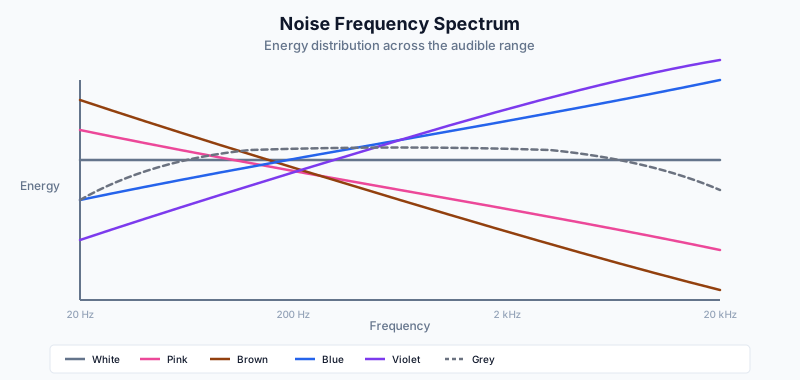
Types of Audio Noise
White
White noise contains equal energy at all frequencies. Like white light containing all colors of the visible spectrum, white noise contains all audible frequencies at equal intensity. This creates a hissing, static-like sound.
- Masking distracting sounds in noisy environments
- Testing speaker frequency response across full range
- Improving focus and concentration while working
Pink
Pink noise has equal energy per octave, which means lower frequencies are louder than higher ones. This creates a fuller, more natural sound that many find soothing—similar to steady rainfall or a waterfall.
- Sleep aid and relaxation
- Speaker and room calibration reference
- Audio mixing and mastering reference
Brown
Brown noise (also called Brownian or red noise) emphasizes low frequencies even more than pink noise, creating a deep, rumbling sound. Named after Robert Brown and Brownian motion, it sounds like thunder, strong wind, or ocean waves.
- Deep relaxation and meditation
- Tinnitus masking (low-frequency focus)
- Sleep aid for those sensitive to high frequencies
Blue
Blue noise has more energy at higher frequencies (+3 dB/octave). It sounds brighter and crisper than white noise, emphasizing treble frequencies.
- Dithering in digital audio processing
- Treble-heavy sound masking
- Testing high-frequency response
Violet
Violet noise (also called purple noise) increases even more steeply at +6 dB/octave. It's the most treble-heavy noise type, sounding very bright and sharp.
- Scientific and acoustic research
- Tinnitus treatment (high-frequency focus)
- High-frequency equipment testing
Grey
Grey noise is psychoacoustically flat - it sounds equally loud at all frequencies to human ears. It uses an inverted A-weighting curve to compensate for how we hear.
- Perceptually balanced sound masking
- Focus and concentration
- Sleep with balanced frequency content
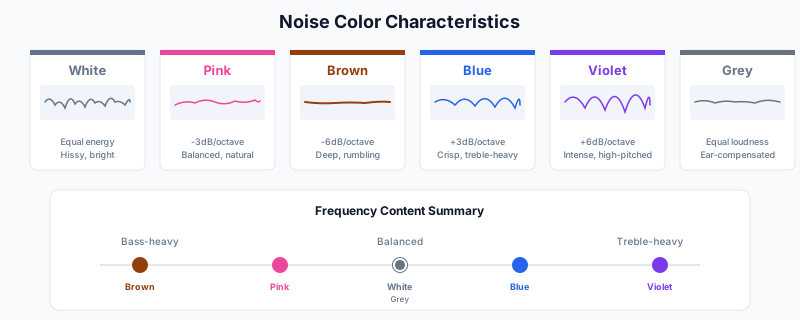
Noise Type Comparison
| Type | Character | Best For |
|---|---|---|
| White | Hissy, bright, like static | Focus, speaker testing |
| Pink | Full, natural, like rain | Sleep, calibration |
| Brown | Deep, rumbling, like thunder | Deep relaxation, tinnitus |
| Blue | Bright, hissy, high-pitched | Audio dithering, treble testing |
| Violet | Very bright, sharp, intense treble | Research, high-freq tinnitus |
| Grey | Perceptually flat, balanced | Focus, sleep, balanced masking |
Using the Controls with Noise
When generating noise, some controls work differently than with pure tones:
- Volume: Start at a low level (15-25%). Noise can be fatiguing at high volumes.
- Stereo Pan: Creates spatial variation in the noise for a more immersive experience.
- Fade: Provides smooth transitions when starting and stopping noise playback.
Bandpass Filtering
Use the bandpass filter to limit noise to a specific frequency range. This creates focused noise that's useful for sound masking and testing.
- Low Cut (Fmin): Removes frequencies below this point (highpass filter)
- High Cut (Fmax): Removes frequencies above this point (lowpass filter)
- Filter Slope: How sharply the filter cuts (12, 24, or 36 dB/octave)
Tips for Using Noise
- Try different noise types to find what works best for you—personal preferences vary widely.
- For sleep, start playing noise 15-30 minutes before bedtime to help your brain transition.
- Use headphones for the most consistent experience—speakers may not reproduce the lowest frequencies.
- Keep volume at comfortable levels—prolonged exposure to loud noise (even soothing noise) can cause hearing fatigue.