

How to Make a Nutrition Label from a Recipe
From ingredient weights to a finished label: the data, the arithmetic, the servings, the rounding and the three regional formats
1. The parts of a nutrition label
A nutrition label has the same four parts in every region: the basis of the declaration (a serving, or 100 g or 100 ml), the energy value, the nutrient amounts, and a reference figure that puts each amount in the context of a daily diet. Around the panel sit the ingredient list and the allergen declaration.
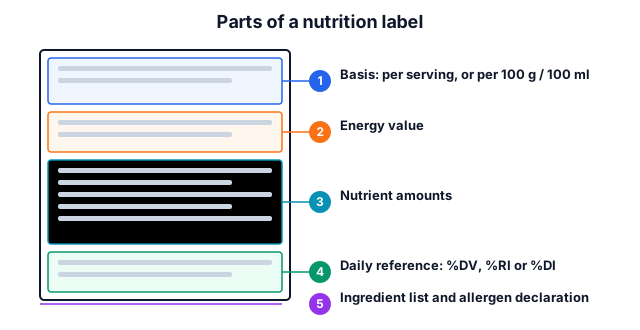
The names differ. In the United States the panel is the Nutrition Facts label and the reference figure is the percent Daily Value (%DV). In the European Union and the United Kingdom the panel is the nutrition declaration and the reference figure is the percentage of the reference intake (%RI). In Australia and New Zealand it is the nutrition information panel, with an optional percentage daily intake (%DI).
2. From recipe to label: the calculation
The label is arithmetic on public composition data. The generator uses the USDA FoodData Central database (April 2026 release), which reports nutrients per 100 g of food. Each ingredient line in your recipe is matched to an entry in that database, scaled to the weight you use, and added up.
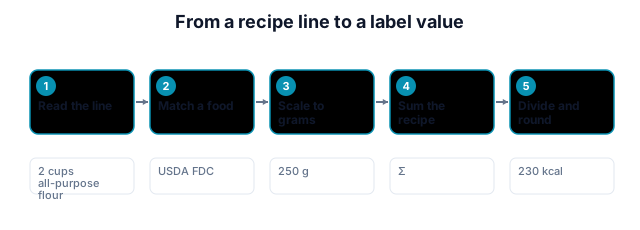
- Each ingredient line is read for its quantity, unit and name (for example "2 cups all-purpose flour") and converted to grams.
- The ingredient is matched to a food in the database, and that food's nutrient profile per 100 g is scaled to the gram weight.
- All ingredient contributions are summed into the recipe total: energy, fat, saturated fat, carbohydrate, sugars, fibre, protein, sodium and the labelled vitamins and minerals.
- The total is divided by the number of servings, or expressed per 100 g, and then rounded with the rules of the chosen standard.
3. Getting ingredients and weights right
The label can only be as good as the weights behind it. Volume units such as cups and tablespoons are converted to grams with typical densities, so a recipe written in grams gives a tighter result than one written in cups. A range such as "2–3 tablespoons" is averaged.
Water lost in cooking matters. A stew that simmers down loses weight but no nutrients, so the same nutrients end up in fewer grams. If you know the finished weight, enter it as the total weight and the per-100 g figures will describe the cooked food; otherwise the tool sums the raw ingredient weights.
4. Servings and the basis of the declaration
Regions differ on what the numbers are expressed per. The US Nutrition Facts label is per serving, and serving sizes are based on the amounts people actually consume, not on a recommended amount. The EU/UK declaration is per 100 g or per 100 ml, with per-portion figures allowed in addition. The Australia–New Zealand panel shows both: per serving and per 100 g (or 100 mL).
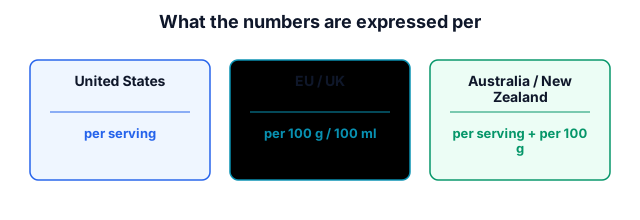
In the generator, the number of servings and the serving size description drive the per-serving column, and the total weight drives the per-100 g column. Change either and the label updates.
5. Rounding
Each standard prescribes how declared values are rounded, and the increments differ. The US rules in 21 CFR 101.9 round calories to the nearest 5 up to 50 and to the nearest 10 above, fat to the nearest 0.5 g below 5 g, sodium to the nearest 5 mg below 140 mg and the nearest 10 mg above, and carbohydrate, fibre, sugars and protein to the nearest gram.
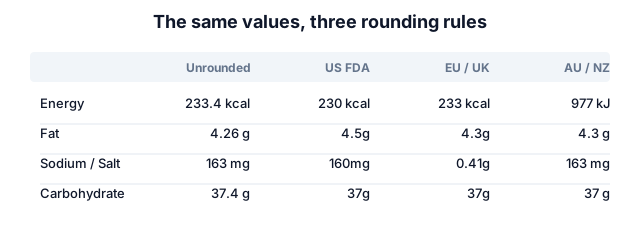
The European Commission's guidance on tolerances (Table 4) rounds energy to whole kJ and kcal; fat, carbohydrate, sugars and protein to 0.1 g below 10 g and to whole grams from 10 g; saturates to 0.1 g with a 0.1 g negligible threshold; and salt to 0.01 g below 1 g. The Australia New Zealand Food Standards Code caps energy and nutrient amounts at three significant figures and allows "LESS THAN" statements below 40 kJ, 1 g and 5 mg.
6. Choosing the format
The standard you pick decides the nutrients shown, their order, the basis and the rounding. Within the US standard you can also choose the vertical, horizontal, linear or tabular layout that FDA allows for different package shapes.
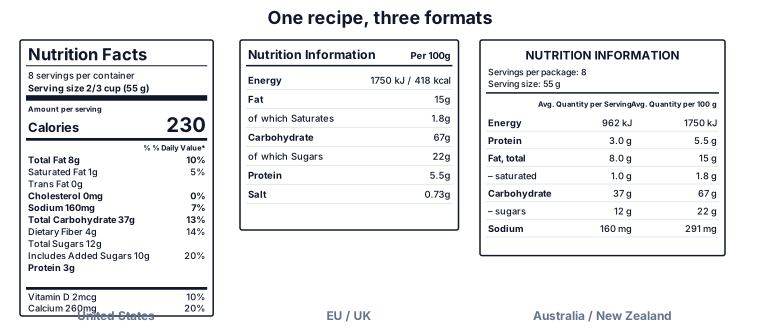
US Nutrition Facts Label
Mandatory: calories, total fat, saturated fat, trans fat, cholesterol, sodium, total carbohydrate, dietary fibre, total sugars, added sugars, protein, vitamin D, calcium, iron and potassium, each with its %DV where one is set. Per serving, in the 2020 format with the larger calorie display and the added-sugars line.
EU/UK Nutrition Declaration
Mandatory: energy (kJ and kcal), fat, of which saturates, carbohydrate, of which sugars, protein and salt, in that order, per 100 g or 100 ml. Per-portion amounts and percentages of the reference intakes (8 400 kJ/2 000 kcal) are optional additions.
Australia and New Zealand Nutrition Information Panel
Mandatory: energy (kJ), protein, fat, saturated fat, carbohydrate, sugars and sodium, per serving and per 100 g, with the number of servings per package and the serving size. Percentage daily intakes based on 8 700 kJ are optional.
7. What a calculated label can and cannot do
A calculated label is an estimate built from average composition data. Nutrient content varies with variety, season, growing conditions and cooking, so two batches of the same recipe never contain exactly the same amounts. Regulators in every region set tolerances for declared values and check them by analysing the food itself.
Sources
- USDA FoodData Central
- 21 CFR 101.9 — Nutrition labeling of food
- Regulation (EU) No 1169/2011 — consolidated text
- European Commission — Guidance document on the setting of tolerances for nutrient values (December 2012)
- Australia New Zealand Food Standards Code — Standard 1.2.8 — Nutrition information requirements
- FDA — How to Understand and Use the Nutrition Facts Label
Ready to make your label?
Paste a recipe, set the servings and pick the standard. The label, the analysis and the ingredient list are generated in your browser.
Open the Nutrition Label Generator